Weakening Rupee a "Perfect Medicine" for High Tariffs: HSBC Economist Pranjul Bhandari on India's Currency Slide
India's recent currency movement has brought back a familiar debate: is the weakening rupee a cause for concern or, rather, a solution that can help correct some deeper structural issues? According to Pranjul Bhandari, Chief India Economist at HSBC, the rupee's gradual depreciation might be exactly the kind of balancing mechanism that is required for the economy at this moment. Her views have come at a time when the Indian currency slipped past the key 90-per-dollar level for the first time, triggering discussions across markets and policy circles.
Bhandari told The Indian Express that the rupee's movement needs to be seen in the broader context of India's elevated trade tariffs, shifting global capital flows and the evolving current account position. She views this weakening as a natural stabiliser for pressures building within the economic system rather than as a signal for crisis.
This is basically because, over the past few quarters, India's current account deficit has been widening, mostly due to weaker exports and strong imports of essential commodities. The deficit, after having hovered near comfortable levels, has crossed USD 30 billion-mark for a few months continuously, thus becoming a cause for concern. A traditional gap like this tends to put downward pressure on the rupee, and this is precisely what has been happening.
According to Bhandari, India has faced two simultaneous challenges: slowing export growth and restricted inflow of foreign direct investment. Capital flows that earlier supported the rupee have been far more cautious this year, making the balance of payments more fragile. Consequently, the currency has adjusted downward, partly absorbing the shock that otherwise would have hit the broader economy.
She mentions another pivotal reason: the trade policy of India. In recent years, the government has increased import tariffs on various items, from electronics to intermediates used in manufacturing. While these hikes were placed to encourage domestic production, they also created some relative price distortions. In other words, imported items became substantially costlier, while domestically produced alternatives did not grow fast enough to meet demand. It is also a factor in shaping up the trade deficit.
"In some ways, this weakening rupee acts as an equaliser to this tariff issue," says Bhandari. Higher tariffs make imports expensive; a weak rupee makes exports attractive. At a time when global conditions are unconducive to competitiveness, it shifts the competitiveness in favour of Indian producers. She says, this "natural adjustment is acting as a shock absorber" that helps the economy cope with the mismatches created by the elevated duties.
Not everything is dire, however. Bhandari mentioned that exports of auto parts, chemicals, and pharmaceuticals and services have been gaining traction in India. While headline exports have slowed down, certain segments proved resilient. And a competitive currency can only help such industries make deeper forays into newer global markets. For a country trying to integrate more deeply with global supply chains, this relative pricing advantage might prove useful in the near term.
She also mentions an interesting shift in the dynamics of global trade. Many ASEAN countries that had a strong price advantage over India have started feeling their own cost pressures. With many economies readjusting to post-pandemic disturbances, India is not as disadvantaged as before. A slightly weaker rupee thus increases the chance for India to capture a larger share of global demand.
While the rupee's slide has naturally raised concerns among households and businesses that rely on imported goods, Bhandari believes the adjustment remains manageable. She stresses that the depreciation has been gradual, not sudden, giving businesses time to adapt. Policymakers too have been monitoring the moves closely, and the Reserve Bank of India has stepped in occasionally to prevent excessive volatility. However, she also notes that the RBI cannot be expected to defend any fixed level of the currency indefinitely. Asked whether the slide could continue, she points to both domestic and global triggers. A surge in U.S. interest rates, geopolitical shocks, and changes in commodity prices play their part in currency fluctuations. But she says India’s macroeconomic fundamentals are not fragile. Inflation has eased from peaks over recent years, fiscal conditions remain steady, and domestic demand remains resilient. Bhandari concludes by adopting a balanced view: the rupee’s movement should not be interpreted as a crisis but as part of a global adjustment process. Insofar as the depreciation remains gradual and orderly, India can navigate the period without severe disruptions. As she puts it, the economy has the “buffers, flexibility and momentum” to sustain the currency correction.
December 04, 2025
4 min read
62 views
Admin User
Article Author
Weakening Rupee: Why HSBC Economist Says It’s the “Perfect Medicine” for India’s Elevated Tariffs
HSBC Economist Pranjul Bhandari says the depreciating rupee is playing the role of a shock absorber for India's high tariff and rising trade stress. As the currency slides beyond 90/USD, she explains why this adjustment can favor exports, competitiveness, and broader economic stability for India.

Related Articles
Continue reading with these related posts

Dec 15, 2025
•
4 min
Vodafone Idea’s ₹83,000 Cr Lifeline: Relief or Just Delayed Collapse?
Vodafone Idea’s massive ₹83,000 crore dues get a temporary breather through a government-backed moratorium. But this isn’t rescue — it’s delayed disaster. This vlog breaks down why Vi remains unstable, why the government stepped in, and why the real problems are still untouched.
Read More
Dec 15, 2025
•
4 min
China’s Dollar Bond in Saudi Arabia: The Power Play That Exposes US Weakness
The 200 billion dollar-denominated bond sale by China in Saudi Arabia is far from normal—it's a clear geopolitical chess move.2 . While raising capital is one goal, the key significance is the location.3 By choosing Riyadh, a historically firm US ally and the heart of the "petrodollar" system, China is using the global reserve currency against the United States itself.
Read More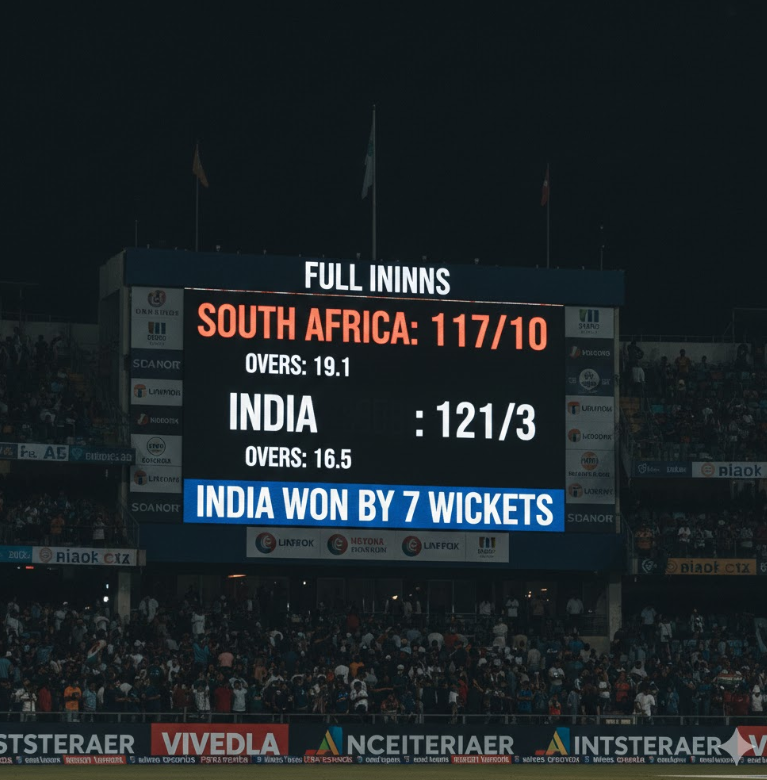
Dec 15, 2025
•
4 min
India Crushes SA in 3rd T20I: The Ruthless Breakdown Behind the 7-Wicket Win
The India destroyed South Africa by seven wickets in the third T20I as the pace attack dismantled SA for 117. This vlog breaks down the ruthless bowling, disciplined chase, and why this win shows India’s real potential — without the hype.
Read MoreRecent Articles
Explore more from our blog