The UPI Paradox: Why Poorer States Lead While Rich States Stall
Everyone keeps bragging about India becoming the global leader in digital payments, especially with UPI exploding across the country. But buried under all the self-congratulation is a paradox that exposes how uneven India’s digital transformation really is. The poorer states are racing ahead in UPI adoption, while the wealthier states—those that should logically be leading—are lagging behind. This vlog tears through the feel-good narrative and shows why the numbers tell a completely different story.
The standard story is simple: UPI is everywhere, everyone uses it, and India has cracked cashless payments. But when you break down state-level data, the trend flips. States with weaker economies, lower per-capita income, and modest infrastructure—places like Bihar, Jharkhand, Uttar Pradesh, and Rajasthan—are showing the fastest UPI growth. Meanwhile, richer states, the ones filled with IT parks, global companies, and higher literacy rates, aren’t growing at the same pace. If this sounds backward, that’s because it is.
Let’s break down the actual reasons behind this paradox
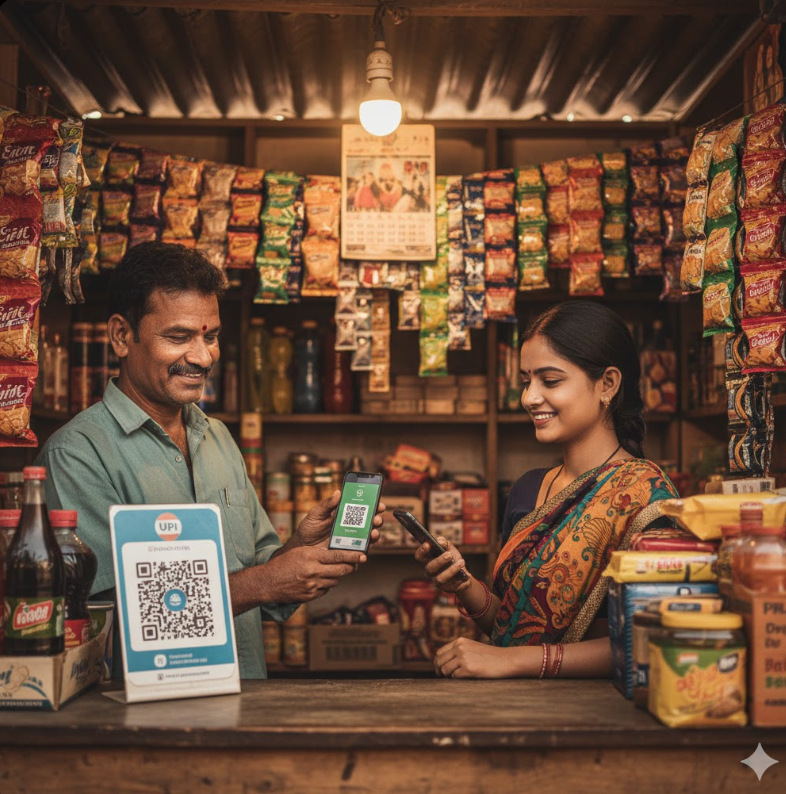
UPI solved their biggest problem: handling change. It removed the friction of daily micro-transactions. In wealthier states, people already had alternatives—cards, wallets, net banking. UPI isn’t fixing a crisis there; it’s just another option. Naturally, adoption in poorer states exploded, while rich states treated it as an upgrade, not a necessity.
Second, the government’s push for financial inclusion was targeted aggressively at backward states. In wealthier states, most of this infrastructure already existed, so the growth curve isn’t as dramatic.
Third, wealthier states have higher digital maturity. People split payments across multiple platforms—credit cards for rewards, EMI cards for purchases, wallets for offers, NFC payments for convenience. UPI is still widely used, but its growth doesn’t spike because the user base is already saturated and fragmented across tools. In poorer states, there’s no fragmentation—UPI is the only convenient method, so every new user pushes the numbers upward.
Fourth, merchants in poorer regions adopted UPI because it removed the burden of handling cash and prevented frequent losses due to fake notes. Wealthier regions don’t suffer from this to the same extent. Shops already had POS machines and established billing systems. UPI was added later, and mostly because customers demanded it—not because the system needed it.
Fifth, the cultural factor. In richer states, people are more skeptical about exposing bank accounts directly through UPI, relying instead on cards and wallets. In poorer states, nobody cares. Simplicity wins. Scan, pay, done. No credit scores, no approvals, no hidden fees.
The Bigger Problem
Now let’s address the bigger problem with this paradox: growth numbers create the illusion that India is progressing evenly. It’s a lie. The richer states plateauing means their digital ceiling is already here. Poorer states rising fast means they’re catching up, but the gap in income, opportunity, and purchasing power still remains massive. Digital progress doesn’t magically fix economic stagnation.
UPI booming in poorer states doesn’t mean these states are becoming wealthier. It only means transactions are becoming digital. That’s it. Nothing more. So anyone using UPI stats as proof of “economic growth” is either misinformed or intentionally pushing propaganda.
There’s another uncomfortable truth. Fintech companies love high-volume, low-value transactions because they make the platforms look powerful. But these transactions don’t create revenue. That’s why many fintech giants are struggling financially despite UPI dominance. The richer states—the ones with higher purchasing power—aren’t generating enough transaction volume to compensate.
The Irony
The irony is sharp:
The states with the least money generate the most UPI growth.
The states with the most money generate the least UPI momentum.
If you don’t see the contradiction here, you’re not paying attention.
UPI is not the indicator of economic strength people think it is. It’s simply proof that India prefers convenience. And convenience adoption starts first where the system is broken the worst.