The Truth About Price Drop Alerts: Are They Real or a Marketing Ploy?
Human-written guide — no fluff, no hype. What’s real, what’s fake, and how to protect your wallet.
Online shopping has become so routine that we hardly think before tapping Add to Cart. And when an app flashes a bold “Price Dropped!” banner, it feels like we just won a mini-lottery.
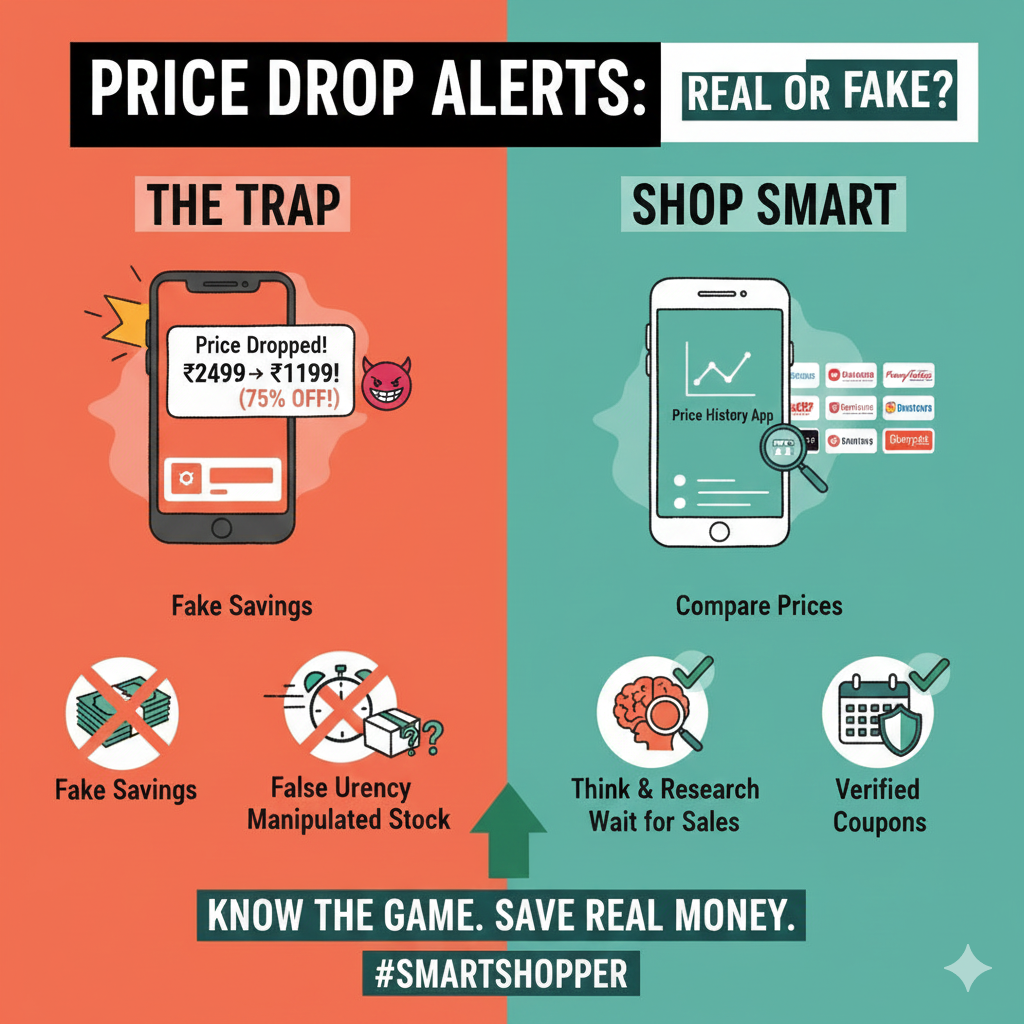
Here’s the uncomfortable truth: many price-drop alerts are crafted to make you buy faster, even when the price hasn’t truly fallen. Some alerts are genuine — but a lot of them are manipulation.
1) How price-drop alerts actually work
Most ecommerce apps quietly track your behaviour:
- what products you view and for how long,
- how many times you return,
- what you wishlist or leave in the cart.
When the system detects you’re “interested but hesitant,” it triggers nudges such as:
- “Price dropped by ₹300!”
- “Limited-time price slash!”
- “Deal unlocked only for you!”
These alerts aren’t random; they’re timed pushes designed to convert hesitation into a purchase.
2) The sham-MRP trick behind many alerts
One classic move is to inflate the reference price and then show a “drop.” For example:
- Display a fictitious high MRP ₹2,499.
- List the everyday selling price as Offer Price ₹1,299.
- Push a notification later: “Price dropped to ₹1,199!”
Reality check:
- The product was never meaningfully sold at ₹2,499.
- ₹1,299 was the real market price all along.
- The “drop” is a token ₹100 — designed to feel big because of the inflated MRP.
If you add an item to the cart and leave, you’ll often see “Hurry! Price is falling.” Open competitor pages? Suddenly it’s “Only 2 left!”. These cues are frequently about your behaviour — not real-time stock or market prices.
3) Real price drops do happen — just not all the time
Genuine reductions usually occur when:
- the seller is overstocked,
- a new model launches,
- the brand runs an official promotion,
- festive or end-of-month sales go live.
These are worth catching — but you’ll only spot them if you know the item’s actual price history, not the marketing MRP.
4) Why platforms exaggerate price-drop alerts
- Excitement → quick decisions,
- Quick decisions → more purchases,
- More purchases → more revenue.
People love the feeling of “saving money,” even when the saving is tiny or imaginary. That psychology drives the tactic.
5) How to shop smart (and avoid being played)
- Check real price history. Use trackers or browser extensions to view past prices over months.
- Compare across 3–4 stores. If only one app shows a “drop,” be skeptical.
- Don’t worship MRP. Cross-check the brand’s own site or past listings.
- Set your own target price. If the deal hits your limit, buy; if not, wait.
- Buy during official sale windows. Festive, payday, or end-of-season events are when true cuts appear.
- Stack savings the right way. Combine real drops with bank offers, UPI cashbacks, and verified coupons.
Pro tip: Before checkout, always grab a working coupon. It takes 20 seconds and often saves more than the “drop.”
Final thoughts — don’t let alerts decide for you
Price-drop alerts are a blend of clever psychology and aggressive marketing. Some are real; many are engineered. Shop on your terms: know the real price, compare widely, check history, wait for genuine offers, and use trusted coupons. Once you understand the game, you’ll stop falling for manipulative banners — and you’ll keep more of your money every time you shop online.