🚨 How Ecommerce Tricks You with “Fake MRP” Techniques (What They Don’t Want You to Know)
If you’ve ever opened Amazon, Flipkart, Myntra, or any other shopping app and felt like everything is “50% OFF,” “75% OFF,” or “Big Price Drop!” — trust me, you’re not alone. The truth is, most people are not getting real discounts. They’re just falling for a trick called **fake MRP**. It’s one of the oldest tactics in ecommerce, and it works so well that companies depend on it to boost sales.
Today, I’ll break down exactly how these fake MRP tricks work, why people keep falling for them, and how you can protect yourself while shopping online. (No fancy financial terms, promise.)
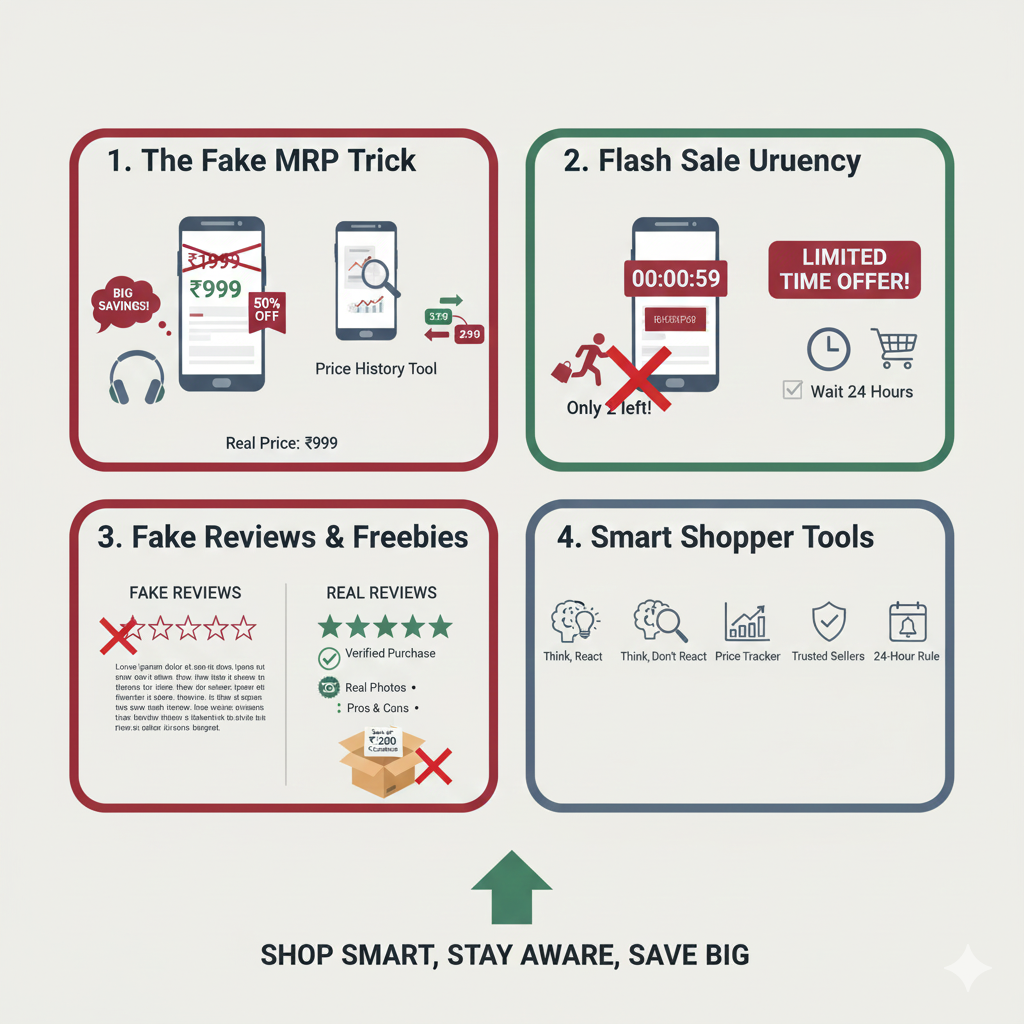
1. 📉 What Exactly Is “Fake MRP”?
MRP means Maximum Retail Price. It’s supposed to be the highest price allowed for sale.
But ecommerce platforms twist the concept by showing:
- An artificially inflated MRP
- A fake discount percentage
- A manipulated “was ₹X, now ₹Y” tag
So even if the product has never sold at that high price, they pretend they’re giving you a huge discount.
How to avoid it:
- Use price history tools (Keepa for Amazon, Flipkart price tracker extensions).
- Compare prices across 2–3 platforms.
- Check the product price one week later — a real price never changes much.
If the same product is “50% off” every day, it’s not a discount — it’s a marketing trick.
2. ⏱️ Beware of Flash Sales That Always Exist
You’ll see banners like: 🟢 “Limited Time Offer!” 🟢 “Deal ends in 01:59:59” 🟢 “Hurry! Only 2 left in stock!”
These timers often reset every time you refresh the page.
How to avoid it:
- Don’t fall for urgency timers.
- Don’t buy instantly — wait 24 hours.
- Check if the same offer appears the next day.
If the offer repeats daily, it’s not a real sale.
3. ⭐ Fake Reviews Are Everywhere — Here’s How to Spot Them
Reviews are the biggest trap. Sellers buy reviews or exchange freebies for 5-stars.
| Signs of Fake Reviews | Signs of Real Reviews |
|---|---|
| ⚠ Repeated phrases (word-to-word similar) | ✔ “Verified Purchase” tag |
| ⚠ Too many 5-star reviews with zero detail | ✔ Reviews with actual photos |
| ⚠ Reviews posted on the same day by new users | ✔ Read 1-star and 2-star reviews (these tell the truth) |
Most fake products are exposed in low-star reviews — always read them.
4. 🎁 The Freebie Trap — “Rate 5 Stars & Get a Gift”
Many sellers add cards inside the product box saying: “Scan this QR code → Get ₹200 cashback for a 5-star review.”
Why it’s dangerous: You end up trusting fake ratings, other buyers get fooled, and the product might be low quality but looks “high rated.”
Never trust products where reviews mention free gifts.
5. 🧑💻 Check Seller Name — Not Just Product Ratings
A high rating on the product doesn’t mean the seller is genuine. Always check the seller page.
Avoid sellers with:
- ❌ Strange, unprofessional names (ABC Retail33, Shopkart 2023 etc.)
- ❌ Too many products in unrelated categories
- ❌ Low seller rating
- ❌ No return policy
Prefer sellers with:
- ✔ Known brand names
- ✔ High return acceptance rate
- ✔ Minimum 1 year selling history
- ✔ At least 4-star seller rating
Good sellers don’t use fake discounts.
6. ⚖️ Compare Offline vs Online Prices
Shocking but true — sometimes offline local shops offer better deals. Especially for: Smartphones, Laptops, Headphones, and Kitchen appliances.
Always do a quick price check at your nearest store, or call the shop for a quote. You’ll be surprised how often online “big discounts” are more expensive.
7. 🤖 Trust Tools, Not Emotions
Your brain gets excited when it sees big discounts and limited stock, but **tools don’t get emotional.**
Use these before you buy:
- Price history tools
- Coupon sites (**coupencode.shop**)
- Seller rating check
- Real user reviews
- Bank offer pages
Tools + logic > fake marketing.
8. 🤳 Don’t Buy From Social Media Ads Without Research
Instagram and Facebook ads often show unreal discounts, copycat brands, or products that look premium but are cheap quality. Never buy anything instantly from a social media ad.
What to do instead:
- Search the brand on Google
- Check reviews on YouTube
- Look for the same product on Amazon/Flipkart
- Verify the website age using “whois” tools
If the brand didn’t exist 2 months ago, skip it.
Final Thoughts: How to Outsmart Ecommerce Tricks
Ecommerce discounts look big, flashy, and exciting. But most of the time, they’re engineered to manipulate your buying decision. Once you understand fake MRPs, you’ll:
- Stop falling for fake deals
- Buy smarter
- Save real money
- Avoid getting tricked by psychological marketing
Remember: A real discount is one that saves you money, not one that only looks big. Online shopping is amazing — when you shop smart. And once you start spotting these tricks, you’ll never get fooled again.