IndiGo Probe: Did the Airline Ignore FDTL Warnings?
Today’s vlog dives into a question that has shaken India’s aviation sector this week: Did IndiGo ignore warning signs long before its nationwide crisis exploded? What started as operational delays and crew shortages has now triggered a full-scale government probe — and the findings so far point to something deeper than a scheduling problem.
Let’s break down the story behind the headlines.
A government-appointed panel is now investigating how IndiGo handled the new Flight Duty Time Limitation (FDTL) norms — rules designed to prevent pilot fatigue and ensure passenger safety. These norms were scheduled to roll out on November 1. But instead of preparing for them, the airline reportedly spent weeks requesting relaxations and postponements.
That’s the first red flag.
Airlines had months of notice to prepare for the new FDTL rules. These rules impact everything — pilot schedules, crew assignments, rostering, duty hours, and rest periods. Adapting to them requires updated planning software, new duty algorithms, and a realistic recalibration of flight operations.
But according to early reports, IndiGo did not update its systems in time. And worse, it may have asked for repeated extensions instead of preparing for the transition. When the rules finally went live, the airline’s operations were already stretched thin — and the system collapsed under its own weight.
This is where things start getting uncomfortable.
The government panel is also examining allegations that IndiGo did not assign duty to pilots and crew in line with the new requirements. If true, that means crew may have been scheduled in ways that violated the fatigue limits set by DGCA (Directorate General of Civil Aviation). Any violation of FDTL norms isn’t just a paperwork issue — it directly affects safety.
And it explains why the airline suddenly saw mass duty-time expirations, last-minute crew shortages, and widespread cancellations.
The committee — consisting of four members — is reviewing the airline’s communication with DGCA over the last several months. Officials familiar with the inquiry say the panel wants to know one crucial thing: Was IndiGo warned earlier? And if yes, did it ignore the warnings?
From the outside, it looks like the crisis was predictable. When new FDTL norms demand more rest and fewer flying hours, airlines must increase their crew pool or scale down their flight schedules. IndiGo reportedly did neither.
Instead, it continued scheduling aggressively — and when pilots timed out mid-duty, operations gridlocked.
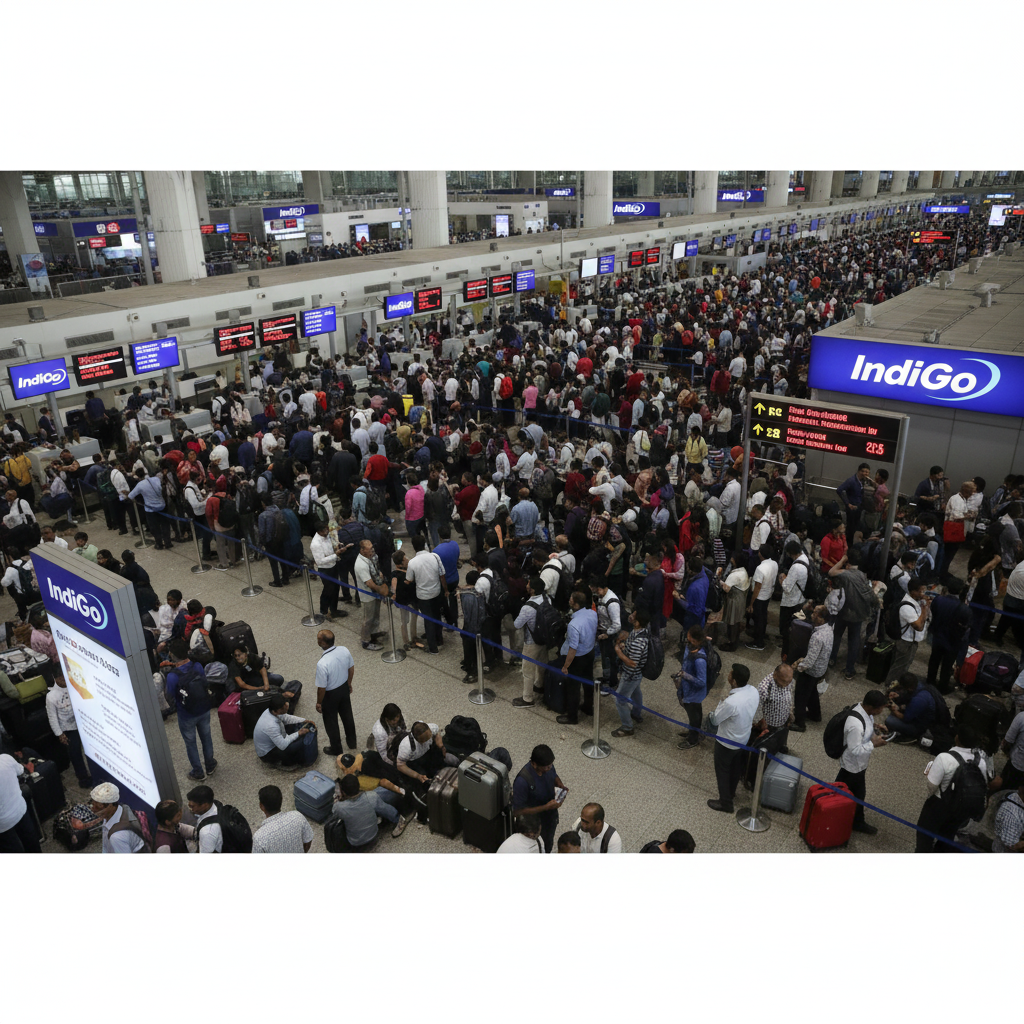
The timing made things even worse. November and December are peak travel months, with packed routes and heavy passenger loads. When an airline fails during this season, the disruption multiplies tenfold. Airports across India saw long queues, stranded families, and flights vanishing from departure screens without warning.
Let’s be brutally honest: passengers suffered because the airline didn’t prepare.
Delayed Software, Broken Rosters
The second part of the investigation focuses on IndiGo’s delayed software adoption. Efficient FDTL management depends entirely on advanced rostering tools that automatically calculate crew hours based on regulations. If your system isn’t updated, the entire scheduling logic fails.
The probe is now trying to determine:
- Why the software update was delayed
- Who approved the decision
- Whether the airline underestimated the operational impact
- And whether DGCA’s warnings were ignored
If even one of these points is proven true, the crisis was avoidable.
What’s Happening Now?
The government has made it clear that this inquiry is not just a formality. The aviation ministry wants to establish accountability — not only for what went wrong, but also for why IndiGo didn’t fix issues earlier. Meanwhile, the airline maintains that it is fully cooperating, but the damage to its reputation is real.
Passengers expect India’s biggest airline to lead the industry — not crumble under new regulations.
As this inquiry continues, one thing is clear: the crisis wasn’t sudden. It was a slow-moving storm that could have been prevented with better preparation, better planning, and better respect for safety norms.
For passengers: stay updated, watch your flight schedules closely, and don’t assume that “India’s largest airline” means “immune to breakdown.”