The Digital D-Day: How Indian Railways Wiped Out 3.02 Crore Fake IDs
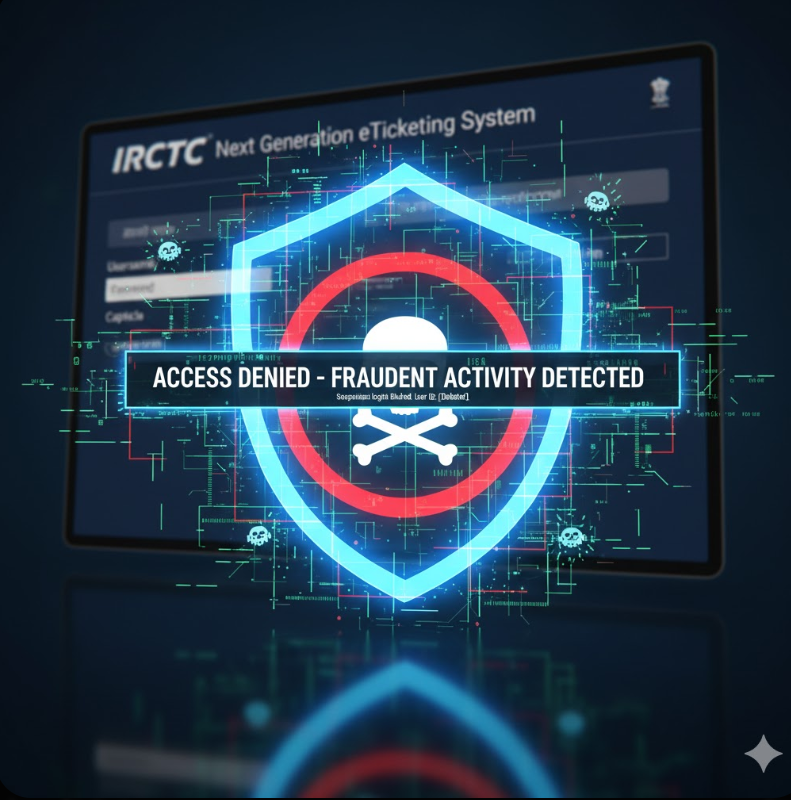
Hello everyone, and welcome to today’s deep dive. What we’re looking at today is one of the boldest and most decisive digital cleanups India has seen in a long time. Indian Railways has quietly executed a massive operation: the deactivation of 3.02 crore suspicious user IDs in under a year.
To put that number into perspective—30.2 million accounts is nearly equivalent to the population of an entire Indian state. The scale alone reveals just how deeply fraudulent identities had embedded themselves into the railway ticketing ecosystem.
This wasn’t just housekeeping. It was a digital war.
A Ticketing System Under Siege
If you’ve ever tried booking a Tatkal ticket, you know the struggle. It felt like a race you could never win:
- Tickets disappearing in seconds
- “Booking failed” messages popping up repeatedly
- Payment screens freezing
- IRCTC servers crashing right when you needed them the most
Meanwhile, the real game was happening elsewhere—far from the average passenger’s screen.
This wasn’t a one-day action. It was a continuous, silent, multi-stage operation. And by the time Railways was done, 30.2 million fake or suspicious accounts were gone.
The Result: A Fairer System for Real Passengers
This cleanup wasn’t just a digital victory—it directly benefits every genuine railway user in the country. Here’s what’s already improving:
- Tatkal tickets stay available for longer. With bots removed, actual humans have a chance again.
- Payment failures and server crashes have reduced. Earlier, bot traffic was choking IRCTC servers.
How the Purge Worked (Key Tactics)
- Device-Cluster Sweeps: If the same device was used for multiple accounts, the entire cluster of accounts was identified and wiped out.
- Real-Time Booking Pattern Analysis: Any account consistently booking high-value Tatkal tickets in abnormal, statistically improbable timeframes was marked suspicious and removed in waves.
Why This Cleanup Matters
Indian Railways handles millions of passengers daily. If the digital entry point is corrupted, public trust collapses. Railways isn’t stopping here.
The Real Impact: What This Means for You
- Tatkal tickets are genuinely easier to obtain. The bots, which previously hoarded inventory in seconds, are gone.
- Payment failures and freezes have significantly reduced. Server capacity is no longer crippled by overwhelming bot traffic.
- Fewer suspicious SMS/OTP triggers. The mass-created, disposable accounts are no longer in the system.
- Less black-market reselling. The digital foundation of the entire scam network has been systematically dismantled.
Simply put, genuine passengers now stand a fair, fighting chance when booking a ticket.
Final Thoughts: Restoring Public Trust
The Indian Railways system is the lifeblood of our public transport, depended upon by over 2.5 crore people daily. This cleanup didn’t just protect the ticketing system; it fundamentally restored faith in it.
What’s next? Railways has promised even stronger identity verification, SIM-swap detection, and continuous AI-driven fraud monitoring. This battle is ongoing.
Deleting 3.02 crore suspicious IDs in under twelve months is not just impressive—it’s transformative. For the first time in years, regular passengers have a fair chance at booking high-demand tickets without competing against an automated black-market machinery.
This is what digital reform looks like when backed with data, technology, and execution.
That’s all for today’s vlog. Stay tuned for more deep dives into India’s biggest digital reforms!