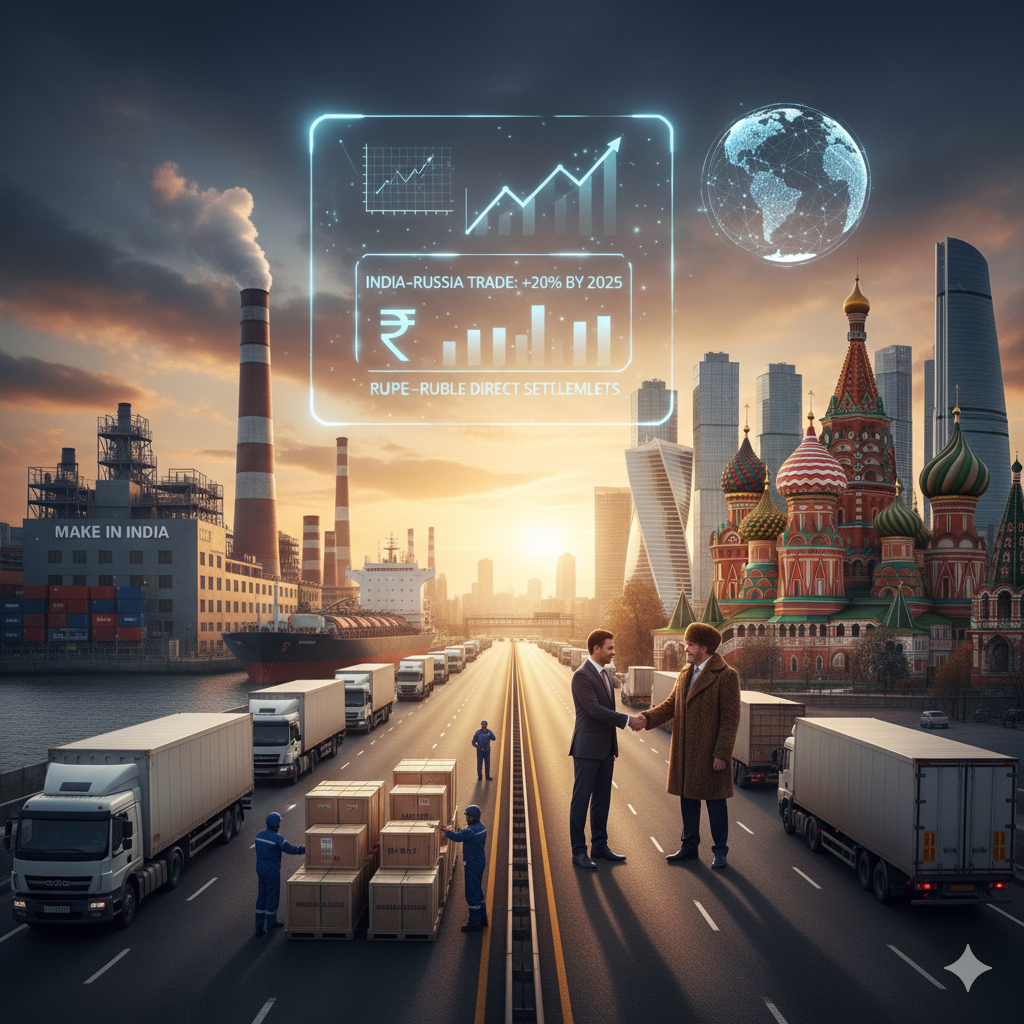
India–Russia Trade Relations Take a New Turn: What It Means for Businesses in 2025
In the last few months, the business world has been buzzing with one recurring topic: the rapidly strengthening trade relationship between India and Russia. While both countries have historically shared strategic ties in defence and energy, the current wave of cooperation is different. This means Russia isn’t only interested in traditional goods anymore. Sectors now under discussion include:
- Industrial machinery
- Automotive and spare parts
- Pharmaceuticals
- Electronics
- Civil aviation components
- Shipbuilding
- Farm produce
- IT and software services
For Indian manufacturers and exporters who often struggle to break into competitive Western markets, Russia provides a relatively less crowded but rapidly growing space. These are:
- Rupee–Ruble direct settlements
- Local currency trade settlement use of alternative worldwide payment gateways
- Banking cooperation via Indian and Russian institutions
If successful, this could dramatically reduce friction in cross-border business and make transactions faster and safer for Indian exporters.
Energy Still Matters, But It's No Longer the Only Focus
Energy will remain a major pillar of the India–Russia partnership, but even this sector is evolving. Talks now include:
- LNG (Liquefied Natural Gas) contracts
- Joint investments in refineries
- Nuclear energy collaboration
- New Long-term pricing mechanisms
Such diversification helps India secure stable energy supplies while giving Russia long-term buyers amid shifting global markets.
Time now for Indian companies to strike gold. Here's how this can happen:
- An Increasingly Expanding Export Market — More Indian goods are sought by Russia. This is one of those rare moments when demand surpasses supply. Textiles, industrial goods, and home appliances hold immense promise. This may also bring down India's overdependence on the US, UAE, and European markets.
- Joint Ventures & Technology Transfer — If discussions on civil aviation, shipbuilding, and industrial machinery move forward, Indian companies could access new technology, training, and financial investment—especially important for mid-scale manufacturers.
- Greater Mobility of Indian Skilled Workers — There are also reports that Russia is considering structured channels of migration for Indian professionals in IT, healthcare, construction, and engineering. This could be a big chance for the young Indian talent hungry for global exposure.
- New Banking Opportunities & Fintech — As Indian fintech and banking institutions design new forms of payment systems, they may be able to seize a rare opportunity to expand their digital infrastructure and services into Russia.
What Businesses Should Be Watching Next
Indian entrepreneurs will have to remain alert to gain from this transformation. Over the next three months, several agreements could be finalized. Here’s what to track:
- The exact list of the sectors prioritized for export expansion
- Banking, payment arrangements to be announced after upcoming summits
- Ease-of-doing-business reforms from Russia for Indian firms
- New logistic routes or reduced transport costs
- Government incentives for exporters venturing into the Russian market
Being early in such shifts typically bestows a massive competitive advantage on businesses. For years, Indian exporters struggled with trade deficits, limited market access, and paperwork complications. But now, with Russia actively seeking Indian goods and services, and with both nations committed to building stable payment channels, the business environment is more promising than it has been in a decade. It’s a real global shift, and those who understand it early will benefit the most.