💔 The Silent Killer: Why Your Heart Attack Risk Hides in Small Plaques
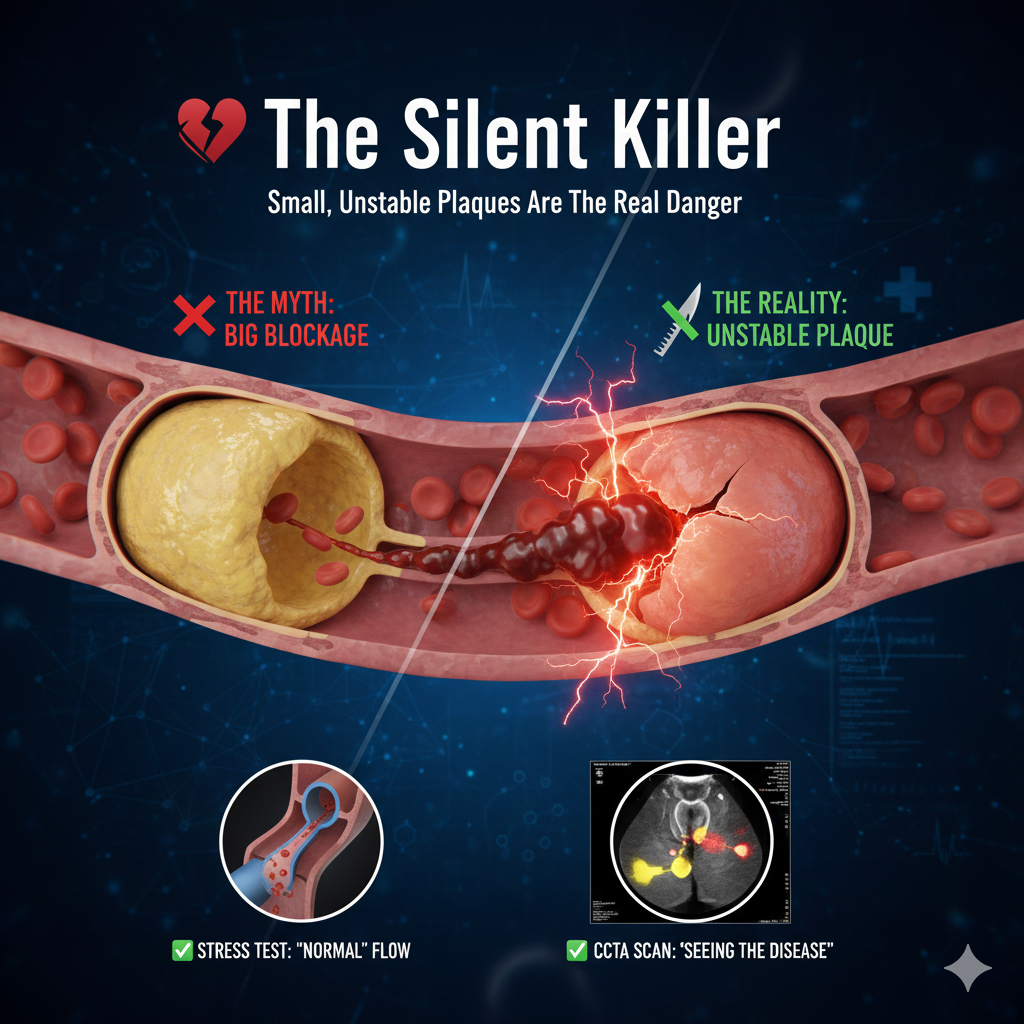
We tend to picture a heart attack as a pipe totally clogged. Logical, sure—but incomplete. Many cardiologists warn the real danger often comes from small, soft, inflamed plaques hiding in the artery wall that can rupture without warning.
Dr. Dmitry Yaranov, a specialist in advanced heart failure and transplant care, recently explained why so many people are blindsided even after “normal” test results. Here’s his message in plain language.
❌ The Myth: Heart Attacks Only Come from Big Blockages
Most people assume a heart attack strikes only when an artery is 90% blocked or more. That’s not the whole truth.
“A stress test looks at traffic flow (how fast blood moves). A CT coronary angiogram looks at the road itself—the cracks, potholes, and weak spots.”
A stress test shows how blood flows when your heart works harder, but it does not show what’s happening inside the artery wall—exactly where the silent danger grows.
🔪 The Real Killer: Small, Unstable, Inflamed Plaques
According to Dr. Yaranov, many heart attacks come from soft, inflamed plaque—tiny deposits that may narrow an artery only 30–40%. They don’t limit flow enough to cause symptoms or stand out on routine tests.
When these plaques rupture, they can rapidly trigger a large clot, cutting off blood supply and causing a heart attack—often without warning.
“You can ace a stress test and still carry silent, unstable plaque.”
⚠️ Why Stress Tests Can Miss Real Heart Disease
- How the heart performs under strain
- Whether a major artery is narrowed enough to reduce flow
- Plaque hidden inside the artery wall
- Small, soft buildups
- Inflamed areas most likely to rupture
A normal stress test is reassuring—but not a guarantee that your arteries are healthy.
✅ The Test That Reveals Hidden Plaque: CCTA
For people with risk factors (diabetes, family history, high blood pressure, high cholesterol) or persistent symptoms, a CT Coronary Angiogram (CCTA) can provide a clearer picture.
- Shows the artery walls in detail
- Detects early plaque and calcium
- Reveals weak, inflamed spots
- Identifies risk long before a major blockage forms
“CCTA sees the disease itself, not the shadow.”
🧭 Final Takeaway: The Dangerous Problems Are Often Invisible
The harsh sequence is simple: soft plaque → inflammation → rupture → heart attack.
A big blockage slows you down. A small, inflamed plaque blindsides you. That’s why experts push for better screening and active risk management—not blind faith in a single normal test.
Important Note
This article summarizes widely discussed cardiology concepts and a doctor’s public explanation. It is for information only and not a substitute for professional medical advice. Always consult your clinician for personalized guidance.