$75 Billion Bet: Adani's Massive Move to Reshape India's Energy Future
This is arguably the biggest investment announcement India has ever seen in the clean energy sector. It’s not just another funding update — it’s a massive, game-changing commitment that could genuinely reshape the country’s entire energy roadmap.
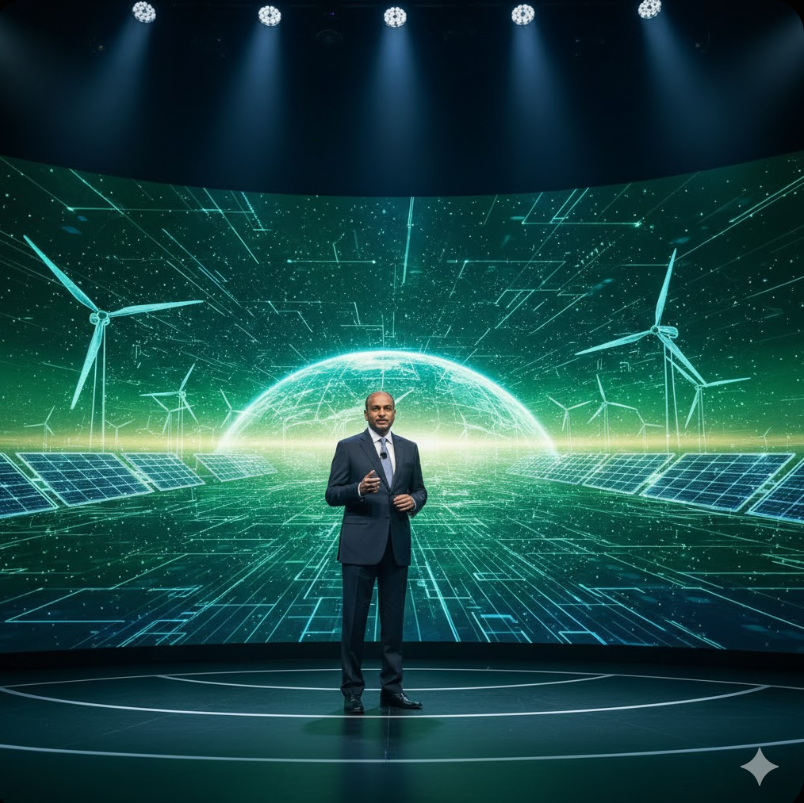
Gautam Adani revealed that the Adani Group will invest more than $75 billion in the energy transition business over the next five years. This isn’t a minor shift; it’s a bold pivot aimed at positioning India as a global force in renewable energy, green hydrogen, and green industrial materials like green steel.
Why $75 Billion Is a Turning Point
The announcement came during the 100-year celebration event at IIT (ISM), Dhanbad. Adani made it clear that the conglomerate’s future focus will lean heavily toward clean energy and away from the traditional fossil-fuel-based infrastructure it has long been associated with.
The significance of this move is simple: when a giant player like the Adani Group turns the wheel, the direction of the entire industry shifts. With massive footprints across ports, energy, logistics, and mining, a $75-billion push doesn’t just back projects — it influences national policy, global competition, and India’s long-term economic positioning.
If achieved on time, this would be one of the largest renewable energy projects anywhere in the world.
What Adani Is Actually Building
The $75-billion investment is spread across several core pillars of the emerging green economy:
1. Green Hydrogen Production
Often called the “fuel of the future,” green hydrogen is expected to replace fossil fuels in heavy industries like steel, shipping, aviation, fertilizers, and chemicals. Adani aims to make India one of the world’s biggest producers — and eventually an exporter — as global demand shifts away from coal and oil.
This is not just an environmental move. It’s a long-term strategic bet on where the world is clearly heading.
Why India Has a Big Advantage
India is uniquely positioned for a clean-energy boom because of:
- Abundant sunlight for solar power
- Strong wind corridors across multiple states
- Availability of large land parcels for mega renewable parks
However, the road ahead isn’t smooth. Challenges include:
- Land acquisition hurdles
- Upgrading existing transmission infrastructure
- Energy storage limitations
- Uncertain hydrogen scaling technology
- High initial project costs
- Global competition from China, the Middle East, and Europe
Even with these obstacles, a commitment this huge shows the intent: the Adani Group wants to move far ahead of the curve. India’s national target is 500 GW of renewable capacity by 2030, and Adani is aiming to capture a major share of that on its own.
Takeaway
The message is loud and clear: India’s energy future is green. Big corporations are driving the shift, and if this momentum continues, the next global energy revolution might just start from Indian soil.